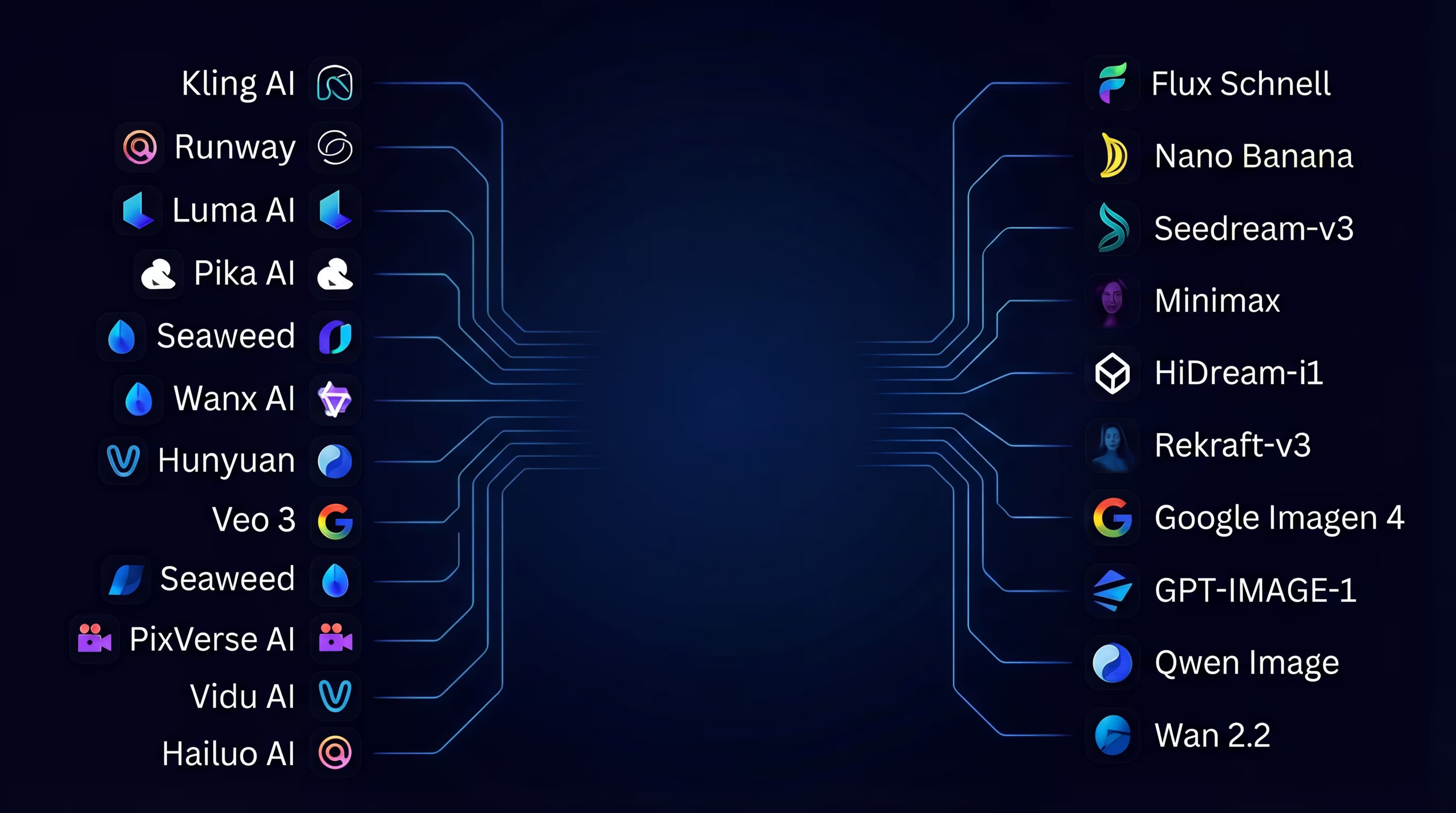

The "AI Video Gold Rush" of 2026 has officially entered its most interesting phase. We’ve moved past the novelty of 'look at this AI cat' and into the era of serious cinematic tools. If you’ve been following the space, you know that Seedance 2.0 (from ByteDance) and Kling 3.0 (from Kuaishou) are the two current heavyweights fighting for the crown.
But here’s the thing: they aren’t just competing on resolution. They are competing on physics.
At Muapi, we’ve spent the last few weeks stress-testing both engines. Here is the unfiltered breakdown of how they handle reality, which one is actually "director-ready," and where the pros are spending their credits.
1. The Engine War: Simulation vs. Storytelling
Most AI models "hallucinate" movement. They guess what the next pixel should look like based on patterns. Kling 3.0 and Seedance 2.0 are different—they actually simulate the world. But they do it with very different priorities.
Kling 3.0: The "Brute Force" Physicist
If you want to see a car explode and have the debris hit the ground with the correct gravitational arc, you use Kling 3.0. Its 3D Spatio-temporal attention is essentially a virtual physics lab.
- The Vibe: Raw, kinetic, and mathematically accurate.
- Best for: High-action VFX shots, liquid simulations (it handles splashing better than anything else right now), and complex character-on-character contact.
Seedance 2.0: The "Director on Set"
Seedance 2.0 doesn't just care that a ball falls at 9.8m/s²; it cares that the ball stays the same color and that the background doesn't warp while the ball is falling. This is where ByteDance’s "Precision Director" approach shines.
- The Vibe: Polished, stable, and narrative-first.
- Best for: Commercials, multi-shot sequences, and projects where "Character A" needs to look exactly the same in three different shots.
2. The Specs (That Actually Matter)
Forget the marketing deck. Here is the technical reality of what these tools can do on our playground right now.
| The Metric | Kling 3.0 | Seedance 2.0 |
|---|---|---|
| Logic | Calculation-heavy physics | Frame-to-frame stability |
| Pace | Faster generation, higher energy | Slower, more deliberate cinematic flow |
| Resolution | 1080p (4K available for Pro) | Native 2K (very crisp) |
| Control | Great for "free-form" action | Extreme (up to 12 reference files) |
3. Don't Just Prompt—Direct.
You can't treat these models like a 2023 chatbot. You have to talk to them like a DP (Director of Photography) or a VFX Supervisor.
How I Prompt for Kling 3.0 (Focus: Kinetic Energy)
I tried a scene of a ramen shop where a bowl drops. In Kling, I don’t just say "bowl breaks." I say:
"Macro 35mm lens. A ceramic ramen bowl impacts a wooden counter at high velocity. Broth splatters with realistic surface tension. Steam interacts with the lighting. Secondary shatters skitter outward. 120fps slow motion." The Result: The noodles actually felt like they had weight. They didn't just "dissolve" into the air.
How I Prompt for Seedance 2.0 (Focus: Cinematic Flow)
For a cyberpunk walk-and-talk, I used Seedance’s reference system:
"Cyberpunk street, rain-soaked. Tracking shot @ 24fps. Subject: [Uploaded Image Ref]. Use a slow dolly reverse. Keep the neon background locked. Trench coat fabric reacts to the wind gusts using realistic cloth physics." The Result: Zero warping. The background felt like a real physical set rather than a moving screensaver.
4. The Professional Verdict
So, which one do you actually use?
- The VFX Route (Kling 3.0): If your shot involves fire, water, breaking glass, or two people hugging/fighting, go with Kling. It handles physical "collisions" without the weird AI melting effect.
- The Ad/Film Route (Seedance 2.0): If you are building an actual sequence for a client, Seedance is the winner. The ability to lock in character identity and environment across a 15-second cut is the "holy grail" for AI production.
The Muapi Workflow
Most pros we talk to are actually hybrid. They’ll use Seedance 2.0 to establish the scene and the "look," then switch to Kling 3.0 for the high-action "hero" shots that need that extra physical punch.
The Bottom Line
The 2026 era of AI video generation isn't about "cool clips" anymore. It's about control. Whether you need the raw physical simulation of Kling or the narrative precision of Seedance, the playground is finally ready for professional work.
Ready to direct? Jump into Seedance 2.0 or Kling 3.0, or try Google Veo 3.1 for cinematic lighting — full guide here.
Related
- Seedance 2.0 Mini API: Prompts, Pricing & Integration Guide — the fastest/cheapest Seedance tier for high-volume workflows
- Seedance 2.1 API: Prompts, Parameters & Integration Guide — next-gen Seedance with 1080p and native audio
- Seedance 2.5 API: Native 4K Video in Seconds — 4K, 16s clips, advanced audio
- Happy Horse 1.1 API Guide — Alibaba's #1-ranked video model, worth including in any head-to-head shortlist